
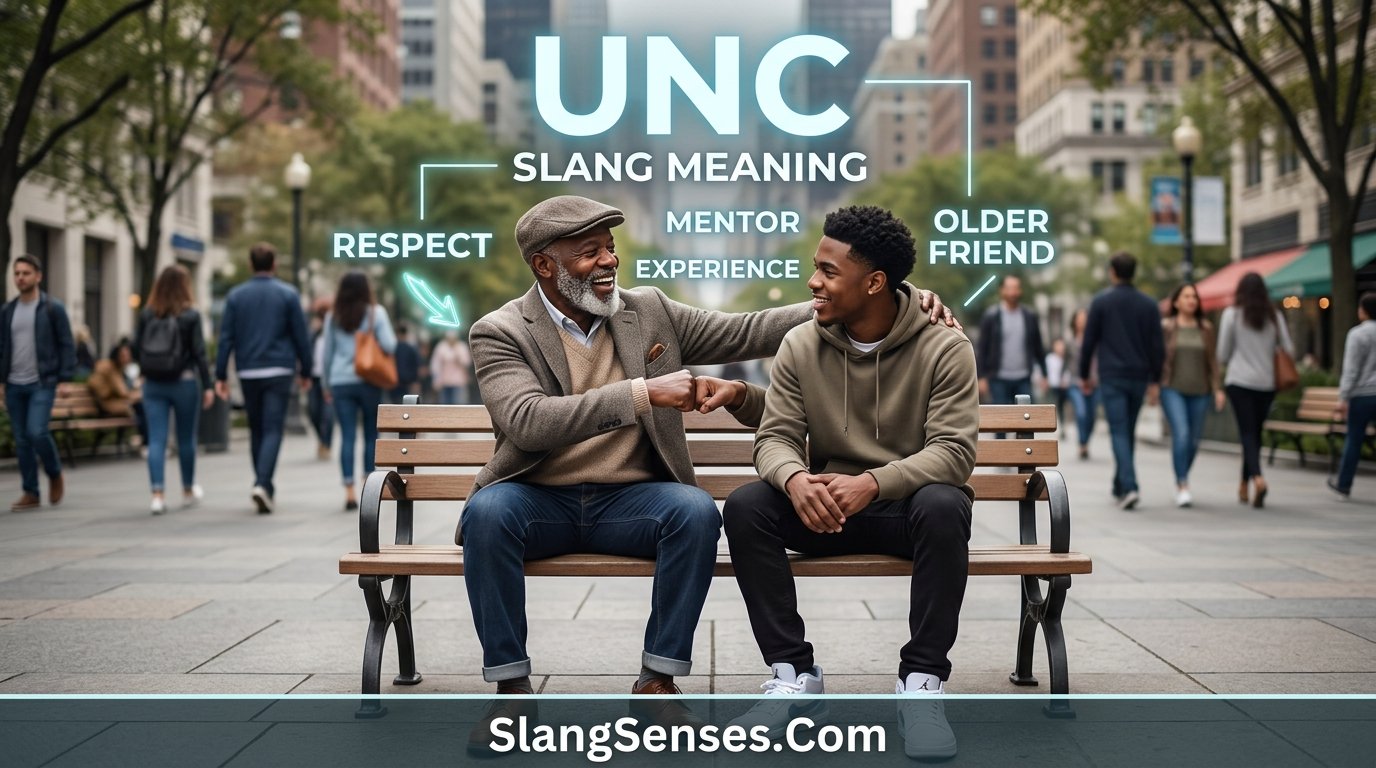
Unc slang is one of those terms you hear a hundred times online before anyone actually explains it — so here’s the answer straight away: unc means “acting like an uncle,” a playful way of calling someone old, out of touch, or set in their ways, even if they’re barely out of their twenties. It started as a respectful term in African American Vernacular English, used for an older man who’d earned that title through age and standing, not necessarily blood. Then TikTok got hold of it in 2021, and it split into something bigger — half joke, half compliment, fully unavoidable.
Today “unc” and its sidekick phrase “unc status” show up everywhere from comment sections to celebrity roasts to brand marketing. Whether it’s affectionate or savage depends entirely on tone and context. This guide breaks down exactly where it came from, how it’s used now, and how to tell when you’ve officially crossed into unc territory.
What is Unc Slang Meaning?
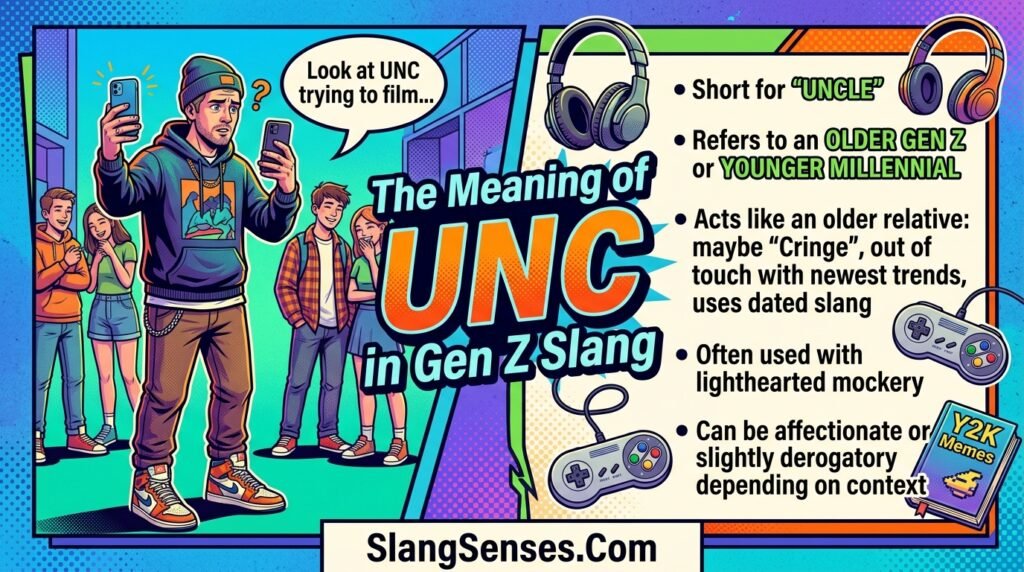
At its core, unc is short for “uncle.” That part’s not up for debate. But the way Gen Z uses it has almost nothing to do with actual family relationships anymore.
Say someone in their 20s still texts in full sentences with proper punctuation. Or they get winded walking up one flight of stairs. Or they say “back in my day” unironically. That’s unc behavior. It’s less about your birth certificate and more about your energy.
Merriam-Webster’s slang dictionary backs this up directly — it defines unc as a shortening of “uncle,” used online to describe someone who’s old, getting old, or acting older than they are. That’s the dictionary-official version. The internet just ran with it.
Here’s the part a lot of explainers skip: unc isn’t automatically an insult. It can be teasing. It can be respect. It depends entirely on tone, and honestly, on who’s saying it.
The Origins of Unc Slang
This is where people get it wrong constantly, so let’s be careful here.
Unc did not start on TikTok. It didn’t start as a Gen Z insult either. The term has roots in African American Vernacular English (AAVE), where it’s been used for decades as an affectionate, respectful term for an older man — not always a blood relative, just someone in the community who’s earned that title through age and standing.
You can hear it in hip-hop long before it went viral. Defari used it back in 2003. Gucci Mane and J. Cole both leaned on it in tracks through the 2010s. In every one of those cases, “unc” meant respect, not ridicule.
Then June 2021 happened. A TikTok creator named @callmechosen85 posted a clip of a younger person greeting him with “wassup unc,” and he captioned it about realizing he’d hit “unc status.” That video is basically the ignition point. From there, the term spread fast, picked up a second, jokier meaning, and never really slowed down.
Writers at outlets like Aftermath have pushed back hard on the idea that unc is some brand-new Gen Z invention — and they’re right to. The joking, “you’re old” usage is newer. The word itself is not.
Understanding “Unc Status”
“Unc status” is the phrase that turned this from a word into a whole bit. It describes the moment you cross over — the point where younger people stop seeing you as one of them.
There’s no test for it. No birthday where it officially kicks in. It’s more of a vibe check you fail without realizing it.
Common triggers people cite for reaching unc status:
- Getting genuinely excited about a good parking spot
- Grunting out loud when you sit down or stand up
- Choosing sleep over literally anything else
- Not recognizing a slang word your coworker just used
- Caring, at all, about your lawn
None of that is a punishment. A lot of people wear “unc status” like a badge at this point. It says: I’ve stopped performing for the algorithm’s idea of cool, and I’m fine with that.
Signs You’ve Reached Unc Status
Some signs hit harder than others. Here’s a quick way to gauge where you land.
| Behavior | What It Looks Like | Unc Level |
|---|---|---|
| Involuntary noises when sitting/standing | Grunts, sighs, “oof” | High |
| Nostalgia loops | “Music isn’t like it used to be” | High |
| Outdated tech loyalty | Still buying DVDs, using a wired mouse | Very High |
| Slang confusion | Asking “wait, what does that mean” mid-conversation | Medium |
| Early bedtime | Asleep before 10pm on a Friday | Medium |
| Generational complaining | “Kids these days” energy | Very High |
| Dad-coded fashion | New Balances, cargo shorts, tucked-in polo | High |
| Communication style | Full sentences and correct grammar in a group chat | High |
If you hit four or more of these, welcome to unc territory. It happens to almost everyone eventually.
How TikTok Made Unc Go Viral
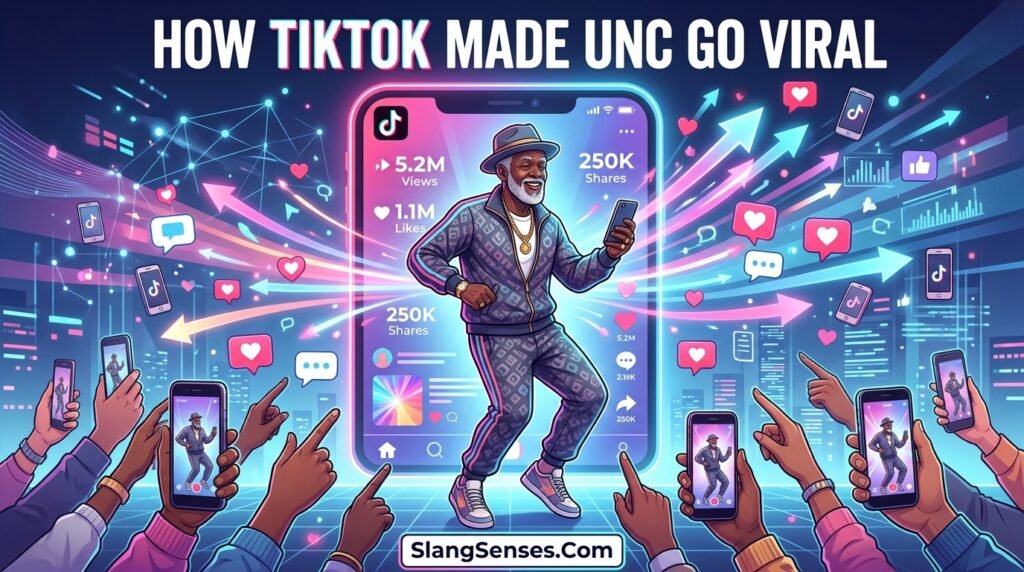
TikTok didn’t invent unc, but it absolutely supercharged it. The app’s comment-section culture is built for exactly this kind of one-word roast — quick, recognizable, endlessly reusable.
Videos of people grilling with old-school R&B on, giving advice nobody asked for, or fumbling a trending dance all became magnets for “unc” comments. It became shorthand. You didn’t need three sentences to make your point — one word did it.
Hashtags built around the term have racked up billions of combined views at this point. It shows up in captions, stitches, duets, and comment threads across nearly every content category, not just slang or comedy accounts.
What’s interesting is who leaned into it. Older creators didn’t fight the label — a lot of them started making content built entirely around embracing “unc energy,” which arguably kept the term alive longer than a purely mocking trend would have.
Unc vs Other Gen Z Slang Terms
People constantly lump unc in with “boomer,” and that’s a mistake. They’re not the same tool.
| Term | Meaning | Tone | Typical Age Tag |
|---|---|---|---|
| Unc | Acting old, uncle-coded | Playful, sometimes affectionate | 25+ |
| Boomer | Out of touch, dismissive of new ideas | Harsh, mocking | 55+ |
| Oldhead | Stuck in old habits or thinking | Neutral to dismissive | 40+ |
| OG | Respected veteran or originator | Purely respectful | Any age |
| Auntie | Female counterpart to unc | Warm, usually flattering | 30+ |
| Chopped | Unattractive or unfortunate-looking | Blunt, negative | Any age |
Boomer is a closed door — there’s no coming back from it. Unc leaves the door open. You can be teased with it one minute and genuinely respected with it the next.
Real Examples of Unc Usage on Social Media
Seeing it in the wild helps more than any definition. Here’s how it actually shows up:
The grill dad. Someone posts themselves grilling with classic soul playing in the background. Comments: “unc’s got the aux and the tongs, nothing stopping him today.”
The unsolicited advice. A guy in his 40s posts about saving money. Reply: “unc really said invest early and I needed that today.”
The dance fail. A millennial attempts a trending dance and clearly hasn’t practiced. Comment: “go off unc, we support the effort.”
The tech struggle. Someone can’t figure out a new app feature. Reply: “certified unc moment.”
The fashion callout. White New Balances with jeans. Comment: “unc status confirmed before he even opened his mouth.”
The music take. “Nobody makes real music anymore.” Reply: “okay unc, we hear you.”
Every one of those examples has a different temperature — some warm, some mocking — and that’s exactly the point. Context does all the work.
You May Like To Read: Gun Slang: Popular Terms You Hear in Movies and Music
The Cultural Significance of Unc in AAVE
This section matters more than most slang articles let on, so let’s slow down here.
In Black communities, “unc” has never been a punchline first. It’s a term of familiarity — used for a neighbor, a mentor, a family friend, anyone who’s earned that kind of respect through age and presence, blood relation or not. Calling someone unc in that context is closer to calling them “sir” with warmth attached.
Journalist Gita Jackson made this point clearly in a widely discussed piece: unc isn’t something you claim for yourself, and it’s not really an insult in its original form. It’s something that gets bestowed on you once you’ve put in the years.
That’s exactly why the mainstream, joking version of unc has drawn some real criticism. When the term gets stripped of its AAVE roots and used purely as an “old person” jab, it loses the respect that gave it meaning in the first place. It’s worth knowing that history before you toss the word around — not to gatekeep it, just to understand what you’re actually saying.
Unc Status Achievement Timeline
Here’s roughly how the “unc clock” tends to run, based on how the term gets used online.
| Age Range | Common Triggers | Unc Likelihood |
|---|---|---|
| 18–22 | Early nights, low tolerance for loud places | Low |
| 23–25 | Joint pain, noise complaints | Medium |
| 26–28 | Slang confusion, preferring nights in | High |
| 29–32 | Getting called “sir,” talking about taxes unprompted | Very High |
| 33–35 | Teenagers looking at you like you’re ancient | Peak |
| 36+ | Full acceptance, zero resistance | Established |
Most people report their first real “unc moment” somewhere around 25 to 28. Behavior still beats birthdate, though — a 22-year-old with a strong “back in my day” habit can absolutely earn early unc status.
Unc in Meme Culture
Unc has spun off its own meme ecosystem at this point, and it keeps evolving.
The “chopped and also unc” format took off after a widely shared clip where a chaperone got roasted by a student mid-conversation. The self-deprecating spin on it — people posting their own “aging moments” using the same audio — is what really carried it.
There’s also “big unc,” used for someone who’s earned an extra layer of respect on top of the usual unc label — think older athletes or public figures who are still clearly at the top of their game. And “unc energy” flipped the format positive, celebrating older folks who actually embrace new trends instead of resisting them.
Different Contexts of Unc Usage
- Respectful: “My unc taught me everything I know about fixing a car.” Genuine gratitude, zero irony.
- Teasing: “He brought a fanny pack to the concert — unc move.” Light ribbing, no real edge.
- Self-deprecating: “I got excited about a new broom. I’m unc now.” Owning it.
- Affectionate: “Unc showed up early just to help me move.” Warmth, not mockery.
- Dismissive: “Okay unc, nobody asked.” Shutting down a take.
- Celebratory: “Hit unc status at 26 and I’ve never felt more at peace.” Full embrace.
Regional Variations of Unc
Not every culture has an exact match for unc, but plenty have something close.
- In parts of the South, “big homie” carries a similar respected-elder weight.
- Caribbean communities often use “uncle” literally, without the meme layer attached.
- UK slang leans on “bruv” or “fam” instead, though neither maps perfectly onto unc.
- Australian slang reaches for “old mate,” which covers some of the same ground.
- In many Asian communities, formal uncle titles carry deep respect, but the joking usage hasn’t really caught on the same way.
Unc in Different Social Platforms
Unc doesn’t live in one app. It just changes shape depending on where it shows up.
- TikTok is home base — comment sections, duets, and hashtag trends all run through it.
- Twitter/X uses it more for public commentary, roasting celebrities or public figures.
- Instagram leans on meme carousels and “signs you’re unc” list posts.
- Reddit treats it more analytically — threads debating exactly when someone “becomes” unc.
- Discord, especially in gaming spaces, uses it for veteran players who’ve clearly been around a while.
Celebrity Unc Status Examples
Public figures get tagged with this constantly, and the reception varies a lot.
| Celebrity | Context | Reception |
|---|---|---|
| LeBron James | Called “unc” by younger NBA players | Embraced, respected |
| Snoop Dogg | Cooking shows, mellow public persona | Beloved unc |
| The Rock | Wholesome, slightly corny dad content | Affectionately roasted |
| Denzel Washington | Decades of respected work | Held up as the gold standard |
| Timothée Chalamet | Joked about turning 30 himself | Self-aware, well received |
Denzel Washington keeps coming up in write-ups about this term for a reason — he’s often cited as the clearest example of unc used purely as a compliment. Long career, earned respect, zero mockery attached.
How Brands Are Using Unc in Marketing
Once a term gets this big, brands notice. And several have leaned into it on purpose rather than pretending it doesn’t exist.
Streaming platforms have marketed older shows as throwback, nostalgia-driven picks aimed squarely at millennials easing into their “unc era.” Playlist curators have built entire collections around 2000s-era nostalgia with captions that wink directly at the trend. Fast food brands have used the term in social replies, poking fun at competitors’ outdated offerings. Even shoe brands have played along, leaning into the “dad shoe” stereotype instead of fighting it.
The pattern is consistent: brands that self-deprecate around unc humor tend to land better than ones that ignore it completely. Millennial audiences respond to being in on the joke, not talked down to.
The Psychology Behind Unc Humor
Why does this term hit as hard as it does? It’s not really about age. It’s about relevance.
Getting called unc taps into a very real, very modern anxiety — the fear of falling behind culturally while everything moves faster than ever. Turning that fear into a joke takes the sting out of it. That’s basically what unc humor is doing on a psychological level: converting a real insecurity into something laughable and shareable instead of something to spiral over.
For younger users, calling someone unc is also a mild way of drawing a generational line without being outright disrespectful. It says “you’re not in my lane anymore” without saying “you don’t matter.” That’s a softer landing than most generational put-downs get.
Gender Dynamics: Unc vs Auntie
Unc has a female counterpart — “auntie” — but the two terms don’t carry equal weight.
Auntie tends to skew almost entirely positive. It’s associated with good taste, sharp advice, and warmth, with much less of the “out of touch” baggage that follows unc around. Men, generally, seem more willing to lean into unc status as a joke on themselves. Women often face more pressure to sidestep aging labels altogether, which is part of why auntie rarely gets used as an insult the way unc sometimes does.
Both terms mark the same basic transition — stepping out of “youth culture” into something steadier. They just get received very differently.
Common Unc Behaviors and Traits
- Physical: audible effort when standing up, falling asleep mid-movie, stretching with sound effects
- Communication: “back in my day” openers, full punctuation in texts, slang used slightly wrong
- Tech habits: one-finger typing, screen brightness cranked too high, missing obvious meme references
- Style: New Balances, cargo shorts, a dedicated “work shoe”
- Entertainment: the nightly news, classic rock, rewatching old shows instead of trying new ones
Unc Status in Different Age Groups
- Teens (13–19): anyone over 23 can get tagged as unc — the age gap just feels huge at this stage
- Early 20s: people in their late 20s start reading as unc
- Late 20s: the first real signs creep in
- Early 30s: peak unc territory, mostly accepted by now
- 35+: fully established, worn without resistance
How to Respond When Called Unc
The best responses don’t fight it — they play along.
- Own it outright: “Yeah, I’m unc. Want some free advice while I’m at it?”
- Lean in harder: Start giving unsolicited life tips on purpose. Make the bit bigger than they expected.
- Comeback with receipts: “Cool, and I also know how to change a tire.”
- Let it go: Not every comment needs a response. Ignoring it works fine too.
- Reframe it: “Better unc than broke,” or whatever flips the joke your way.
Getting genuinely defensive is really the only response that backfires. The joke only has power if you fight it.
The Future of Unc Slang
Slang burns out fast, usually. But unc has a few things going for it that most trends don’t.
It’s not tied to one platform, one meme format, or one specific event — it’s tied to a universal experience (getting older) that never stops being relevant to somebody. That’s a stronger foundation than most viral terms get.
There’s also a real chance it eventually eats into “boomer’s” territory as the default generational jab, mostly because it’s less harsh and more flexible. Some early signs already point to the term stretching past people entirely — “unc technology,” “unc fashion” — describing anything dated rather than just someone dated.
Related Slang Terms and Phrases
| Term | Meaning | How It Connects to Unc |
|---|---|---|
| Chopped | Unattractive or rough-looking | Frequently paired with unc for a double insult |
| Cooked | Doomed, about to fail | Similar “you’re done” energy |
| Rizz | Natural charisma, ability to attract | Uncs are jokingly assumed to lack this |
| Cap / No Cap | Lying / telling the truth | Uncs get teased for using it wrong |
| Sigma | Independent, unbothered persona | Framed as the opposite of typical unc energy |
| Skibidi | Gen Alpha nonsense slang | The ultimate “you wouldn’t get it, unc” term |
Unc in Professional Settings
Short version: leave it at the door.
Among close peers in a casual workplace — a startup, a creative team — it might land fine as a joke between equals. Anywhere with a real hierarchy, though, it’s a bad idea. A manager calling an employee unc isn’t playful; it reads as condescending no matter the intent. In client-facing roles, skip it completely. It’s just not that kind of word.
The Unc Starter Pack Meme

The “starter pack” format took unc and turned it visual — a grid of items and habits that scream uncle energy the second you see them.
Typical inclusions: New Balance sneakers, a grilling apron, reading glasses on a chain, a phone with a cracked screen and the volume stuck on max. Common phrases attached to the format: “back in my day,” “kids these days,” “I’m not old, I’m vintage.”
It’s a format that keeps regenerating because it’s so easy to remix — swap the details, keep the joke.
International Perspectives on Unc
Outside the U.S., the exact word doesn’t always travel, but the concept does.
The UK reaches for “uncle” or “bloke” without quite the same meme machinery behind it. Canada mirrors U.S. usage almost exactly, given how closely the two cultures overlap online. In much of Latin America, “tío” gets used literally rather than as internet slang. Many parts of Asia treat age with more built-in formal respect, which makes a joking version of the term less likely to take off the same way.
Unc in Gaming Culture
Gamers adopted unc fast, and it fits almost too well.
A 30-something player in a lobby full of teenagers gets tagged as unc the second their mic turns on. “Unc still got it” is the compliment version — surprise plus respect when an older player clearly still has skills. There’s also a nostalgia layer here: uncs in gaming spaces are the ones who remember blowing into a cartridge to get it working, which younger players find genuinely wild.
The Commercialization of Unc
Once a word gets this big, merch and content follow — that’s just how internet culture works now.
T-shirts with “officially unc” printed across them sell as joke gifts. YouTube channels run entire “unc status” ranking series built around celebrities and public figures. Podcast hosts open episodes joking about when they personally crossed over. None of that would exist if the term hadn’t already proven it has staying power.
Unc and Mental Health
For some people, being called unc genuinely stings — it taps into real anxiety about aging in a culture obsessed with staying young and relevant. That reaction is valid, even if the comment was meant as a joke. For others, the humor works the opposite way: turning aging into a punchline actually makes it easier to sit with. Laughing about it takes some of the weight off.
If a joke about aging is landing harder than it should for you, that’s worth paying attention to — not because the word is dangerous, but because how we talk about getting older shapes how we feel about it.
Frequently Asked Questions
Why does Gen Z say unc?
Is unc a disrespectful term?
What does calling a girl unc mean?
What is the difference between Unc and OG?
Conclusion
Unc slang didn’t start as a joke, and that’s easy to forget once you’ve seen it slapped under a thousand TikTok comments. It began as a term of genuine respect in African American Vernacular English — something you earned, not something anyone mocked you with. What’s shifted isn’t the word itself; it’s how loosely and how widely people throw it around now.
That’s actually what makes it worth understanding, not just repeating. Knowing where “unc” comes from changes how you hear it — as a compliment, a tease, or somewhere in between, depending on who’s saying it and why.
So the next time someone calls you unc, you’ll know it’s not really about your age. It’s about energy, timing, and whether you’ve stopped chasing what’s “cool.” And if you have? Honestly, that might be the most unc thing about you — and there are worse things to be.

Rathna Kannan is a language enthusiast and writer at Slang Senses, sharing simple explanations of modern slang, internet expressions, and trending phrases. Rathna enjoys exploring how language evolves through social media and everyday conversations.
4 thoughts on “Unc Slang Meaning: What It Really Means in 2026”